


Fibroid Treatment Without Surgery
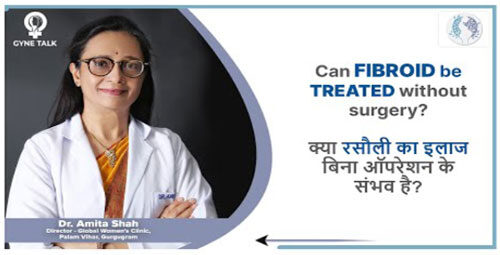
I’m Dr. Amita Shah, Senior Consultant Gynecologist and Laparoscopic Surgeon from Gurgaon, offering expert treatment for fibroid and advanced care for women with fibroid-related conditions.
Does every fibroid need treatment, and is surgery the only option for fibroid treatment uterus cases?
Today, I’m going to discuss these questions and explain fibroid treatment without operation options in detail.
What is a Fibroid Uterus?
A fibroid develops in the uterus, resembling a kind of knot, and is classified as a benign tumour, which means it is generally not cancerous. However, in rare cases, they can become cancerous. This condition is commonly known as a fibroid uterus, and timely fibroid uterus treatment medicine or monitoring can help manage symptoms effectively
So, what exactly is a fibroid, and why does it occur? Research is still ongoing to understand the exact causes of fibroid development.
In some cases, fibroids may develop due to genetic or racial factors. If your mother, aunt, or sister has had fibroids, your chances of developing them yourself might be higher. Fibroids are also more common among Black individuals. Additionally, hormone-related factors, such as not having children or having few children, can increase the likelihood of developing fibroids.
Fibroids can be very different in size. They can be as tiny as a pea or as large as a football. Despite this range in size, not all fibroids need to be treated. About 50% of fibroids don’t cause any noticeable symptoms. If a fibroid isn’t causing any problems or symptoms, it usually doesn’t need treatment, and fibroid best treatment may simply be regular monitoring.
So, which types of fibroids need treatment?
You may need treatment if your fibroids are large, usually around 4–5 cm or bigger, or if they are causing significant symptoms or health problems that require fibroid removal from the uterus or medical intervention.
What are the symptoms of fibroids?
In cases of fibroid conditions, women may experience various symptoms simultaneously, but the exact symptoms and their severity may vary among individuals.
Some of the common symptoms of fibroid condition are listed below:
Changes in the Menstrual Cycle:
- Irregular periods (menstrual disorder).
- Excessive bleeding (abnormal flow).
- Longer duration than usual menstrual cycle.
- Presence of blood clots during periods.
Other Menstrual Symptoms:
- Irregular periods.
- Abnormal pain during menstruation.
Problems due to fertility?
Due to fibroid condition, one may face infertility problems. In cases of large fibroids, one may face compression symptoms. One may face obstruction or frequent urination if the compression is more towards the front side. If the compression is more towards the backside, one may face constipation problems.
When Fibroids are small but need treatment?
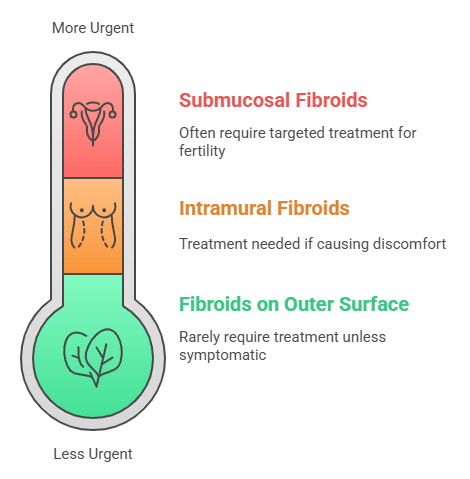
Fibroids are non-cancerous growths in the uterus that can vary in size. Even if they are small, treatment might still be necessary depending on their location and impact. Here’s when treatment becomes important:
-
Submucosal Fibroids: grow during pregnancy. Even small submucosal fibroids, as small as 1–2 cm, may need treatment because they can significantly impact fertility and uterine function, often requiring targeted treatment for fibroid.
-
Intramural Fibroids: Intramural fibroids grow within the muscular wall of the uterus. If these fibroids press on the uterine cavity, they can cause symptoms such as pelvic pain, heavy bleeding, or problems with the uterus’s ability to expand properly during pregnancy. Treatment may be necessary if these fibroids cause significant discomfort or affect the function of the uterus.
-
Fibroids on the Outer Surface: Fibroids that grow towards the outer surface of the uterus and are not large generally do not require treatment unless they cause symptoms or complications. These fibroids are often less likely to impact fertility or cause significant discomfort than submucosal and intramural fibroids.
Understanding the type and location of fibroids is crucial in determining the appropriate treatment. Consulting with a healthcare provider will help decide whether treatment is needed based on individual symptoms and health conditions.
Types of Treatment for Fibroid Removal
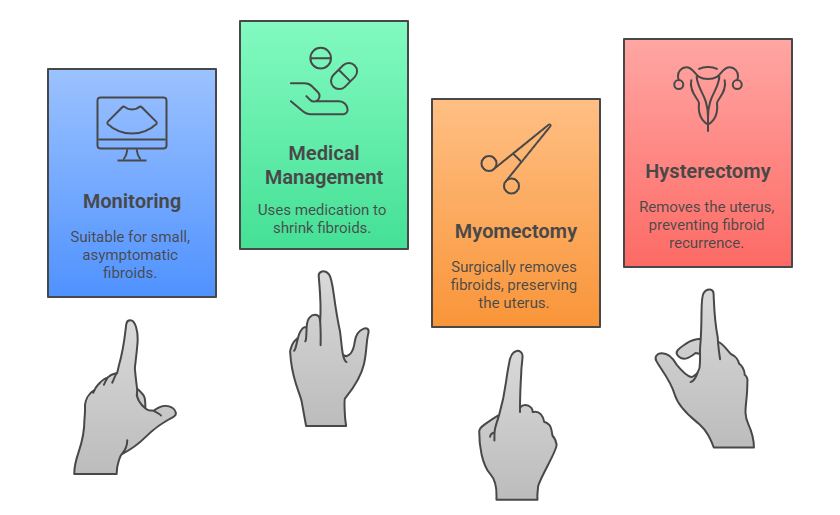
As mentioned earlier, if fibroids do not exhibit any symptoms and are very small, they can be monitored through regular ultrasound checks every six months to a year to track their growth.
- Medical Management
The first option for fibroid treatment without operation is medical management, which involves fibroid uterus treatment medicine. These medicines help shrink fibroids gradually and are prescribed only under medical supervision.
- Myomectomy
The second surgical option for treating fibroids is called myomectomy. The word ‘myomectomy’ comes from ‘myoma,’ which means fibroids (non-cancerous tumours in the uterus), and ‘ectomy,’ which means removal. So, myomectomy is a procedure to remove these fibroids from the uterus.
Myomectomy is used when other treatments, like medication, don’t work or aren’t appropriate.
- Hysterectomy
In some cases where a patient has children and doesn’t want to go for pregnancy anymore, or if the patient’s age is above 45-50 years, we advise uterus removal along with fibroid removal. This surgery is known as hysterectomy. The reason why laparoscopic surgeons go for hysterectomy surgery is because even after myomectomy, there are chances of fibroid re-occurrence.
Conclusion
The treatment for fibroids depends on several medical factors. Choosing the right treatment for fibroid whether medication, myomectomy, or hysterectomy requires proper evaluation.
Assessing both pre- and post-surgery conditions, laparoscopy is considered one of the fibroid best treatment options for appropriate cases.
To know how to shrink fibroid naturally, including lifestyle changes and fibroid yoga treatment, visit here.
To learn more about laparoscopy for fibroids, visit our blog section. For any assistance, please leave a comment or use the chat feature.