Fibroid or Adenomyosis? Understanding the Difference Before Treatment
If you’ve recently had an ultrasound and your doctor mentioned a lump in your uterus, it’s natural to feel worried. However, not all uterine lumps are the same. The most common possibilities are uterine fibroids and adenomyosis, and the treatment approach for each is very different.
That’s why it’s extremely important to discuss with your doctor whether the lump is a fibroid or adenomyosis, as this directly impacts whether you may need surgery or can be managed with medicines.
I’m Dr. Amita shah, Senior Consultant Gynecologist and Laparoscopic Surgeon practicing in Gurgaon, and in this blog, I’ll help you understand the key differences between fibroids and adenomyosis, their symptoms, diagnosis, and treatment options.
What Is a Uterine Fibroid?
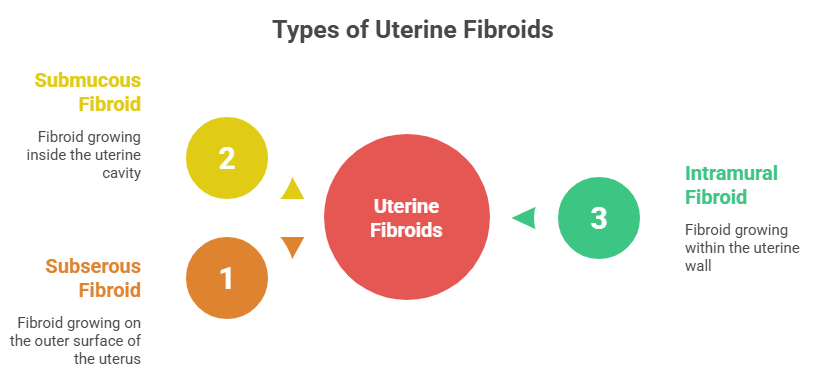
A fibroid is a non-cancerous lump that develops from the muscular layer of the uterus, known as the myometrium. Fibroids can be single or multiple, and their location determines their type:
- Subserous fibroid: Grows on the outer surface of the uterus
- Submucous fibroid: Grows inside the uterine cavity
- Intramural fibroid: Grows within the uterine wall
Fibroids usually form a well-defined, solid cluster, which makes them easier to identify on ultrasound.
What Is Adenomyosis?
Adenomyosis occurs when the inner lining of the uterus (endometrium) starts growing into the muscular wall (myometrium).
Every month during menstruation, these endometrial cells bleed. However, since the bleeding happens within the muscle wall, the blood gets trapped and cannot drain normally. Over time, this causes pain, inflammation, and thickening of the uterus.
Types of Adenomyosis:
- Diffuse adenomyosis: Blood spreads throughout the myometrium, causing the uterus to become bulky and enlarged
- Localized adenomyosis (Adenomyoma): Blood collects in one area, forming a cluster, but unlike fibroids, this cluster is not well-defined
Common Symptoms of Fibroid and Adenomyosis
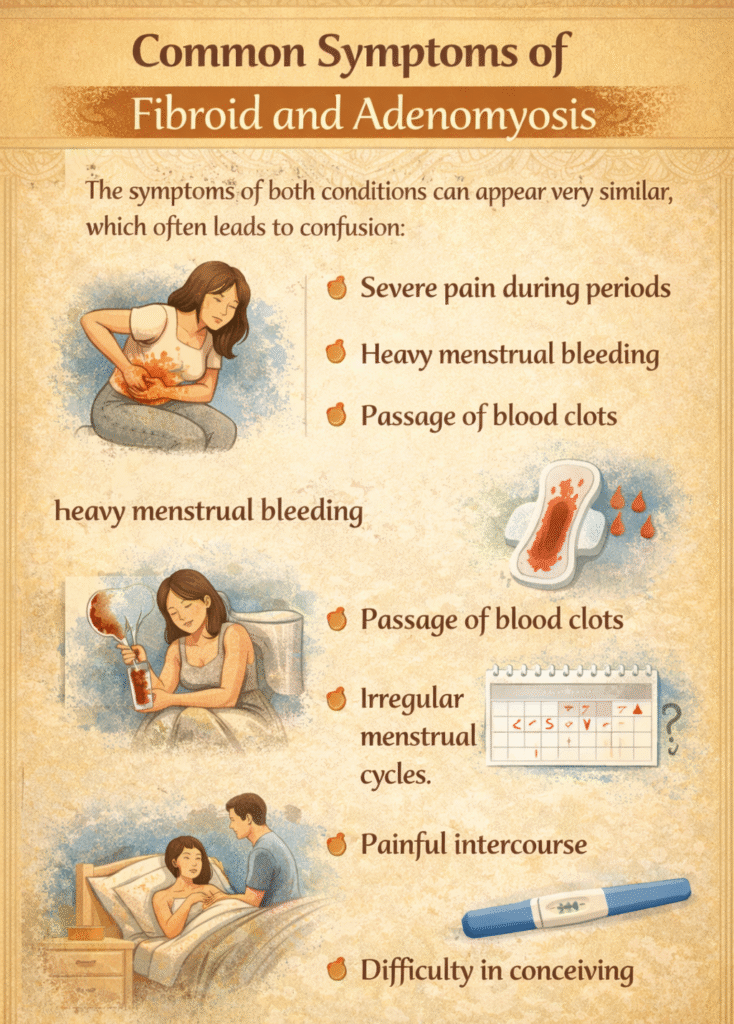
The symptoms of both conditions can appear very similar, which often leads to confusion:
- Severe pain during periods
- Heavy menstrual bleeding
- Passage of blood clots
- Irregular menstrual cycles
- Painful intercourse
- Difficulty in conceiving
Key difference:
Severe, cramp-like pain during periods is more prominent in adenomyosis.
How Are Fibroid and Adenomyosis Diagnosed?
A good-quality ultrasound is usually sufficient to differentiate between the two:
- Fibroid: Appears as a well-defined mass
- Adenomyosis: Appears as a spread-out, ill-defined area within the myometrium
Accurate diagnosis is crucial because it determines the treatment plan.
Difference in Treatment Approach
Treatment of Fibroids
If a fibroid is:
- Large
- Causing significant symptoms
- Affecting quality of life
Surgery is usually required to remove the fibroid.
Treatment of Adenomyosis
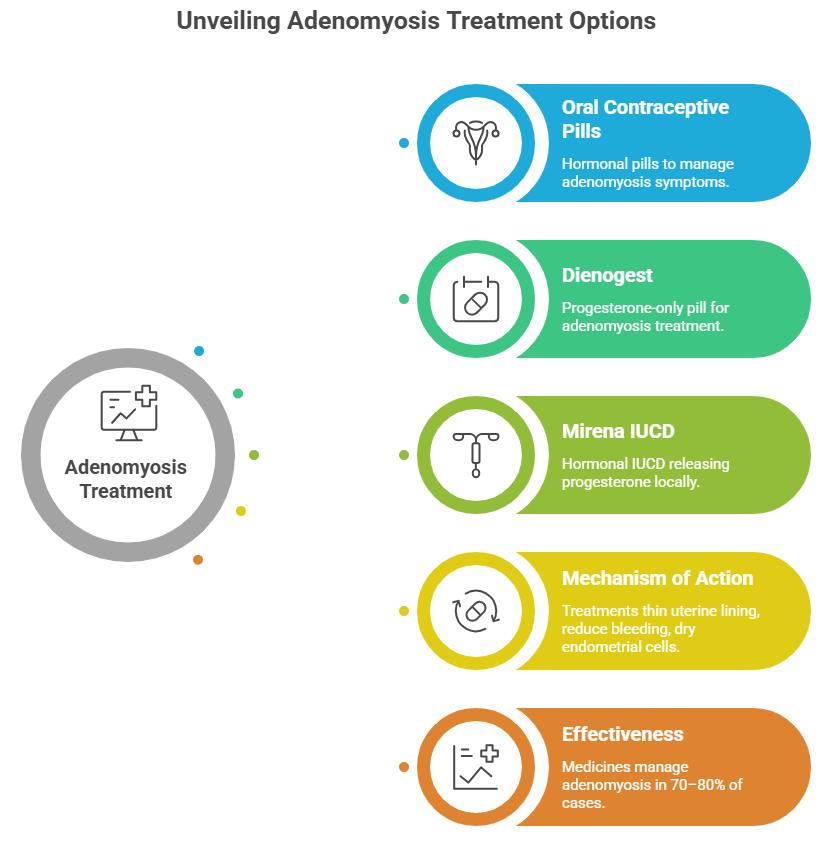
If adenomyosis is diagnosed early, it can often be treated without surgery.
Common medical treatments include:
- Oral contraceptive pills
- Dienogest (progesterone-only pill)
- Mirena (hormonal IUCD) that releases progesterone locally
These treatments help by:
- Thinning the uterine lining
- Reducing bleeding
- Gradually drying up endometrial cells trapped in the myometrium
Result:
In nearly 70–80% of cases, adenomyosis can be effectively managed with medicines alone.
Conclusion
If you’ve been told that there is a lump or cluster in your uterus, don’t panic but do ask the right question:
Is it a fibroid or adenomyosis?
The correct diagnosis can help you avoid unnecessary surgery and choose the most effective treatment.
If this blog helped clear your confusion, do support us by liking and subscribing to our channel. Your encouragement motivates us to create more informative, educational content on common gynecological problems so you can stay informed and healthy.