

Relief from Heavy Bleeding & Fibroids with Safe Hysterectomy Surgery
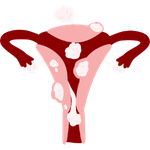
Heavy bleeding, severe cramps, fibroids, or prolapse can drain your energy and disrupt your daily life. A hysterectomy (uterus removal surgery) can provide long-term relief when medicines and other treatments no longer work.
Dr Amita Shah is a senior gynecologist and advanced laparoscopic surgeon in Gurgaon with decades of experience in performing safe, minimally invasive hysterectomies for fibroids, adenomyosis, endometriosis, prolapse, and gynaecological cancers.
Relief from Heavy Bleeding & Fibroids with Safe Hysterectomy Surgery
Heavy bleeding, severe cramps, fibroids, or prolapse can drain your energy and disrupt your daily life. A hysterectomy (uterus removal surgery) can provide long-term relief when medicines and other treatments no longer work.
Dr Amita Shah is a senior gynecologist and advanced laparoscopic surgeon in Gurgaon with decades of experience in performing safe, minimally invasive hysterectomies for fibroids, adenomyosis, endometriosis, prolapse, and gynaecological cancers.
What Is a Hysterectomy?
A hysterectomy is a surgery to remove the uterus and sometimes the cervix, and in selected cases, the ovaries and fallopian tubes. After this surgery, periods stop permanently, and pregnancy is no longer possible.
Types of hysterectomy:

Total
Uterus and cervix
removed
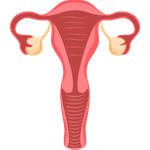
Subtotal
Upper uterus removed, cervix
preserved
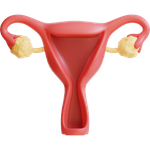
Radical
Uterus, cervix and nearby tissues removed

Approaches used: laparoscopic, vaginal, or abdominal, chosen as per your condition and safety.
When Is Hysterectomy Recommended?
Hysterectomy is usually advised when symptoms are severe and persistent, and conservative treatments are not helping.
Common reasons include:

Heavy, prolonged, or irregular bleeding
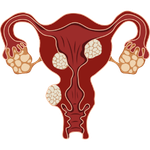
Uterine or cervical cancer, or a strong suspicion
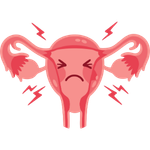
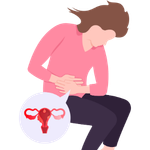
Endometriosis with chronic pain

Uterine prolapse causing discomfort or pressure
Symptomatic fibroids or adenomyosis
Dr Shah discusses all alternatives with you before recommending surgery so you can make an informed choice.
Benefits & Risks
For many women, a hysterectomy is a turning point, freeing them from years of pain, heavy bleeding, and anxiety.
Benefits:
- Long-term relief from heavy periods and cramps
- Reduced pelvic pain and pressure
- Better sleep, energy, and day-to-day comfort
- Reduced risk of uterine and cervical disease
Risks:
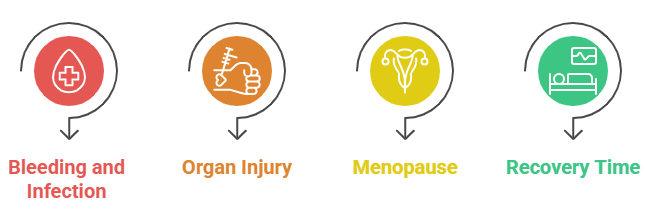
- Bleeding, infection, blood clots
- Injury to nearby organs
- An earlier menopause if the ovaries are removed
- Longer recovery time and physical limitations
Laparoscopic Hysterectomy with Dr Amita Shah
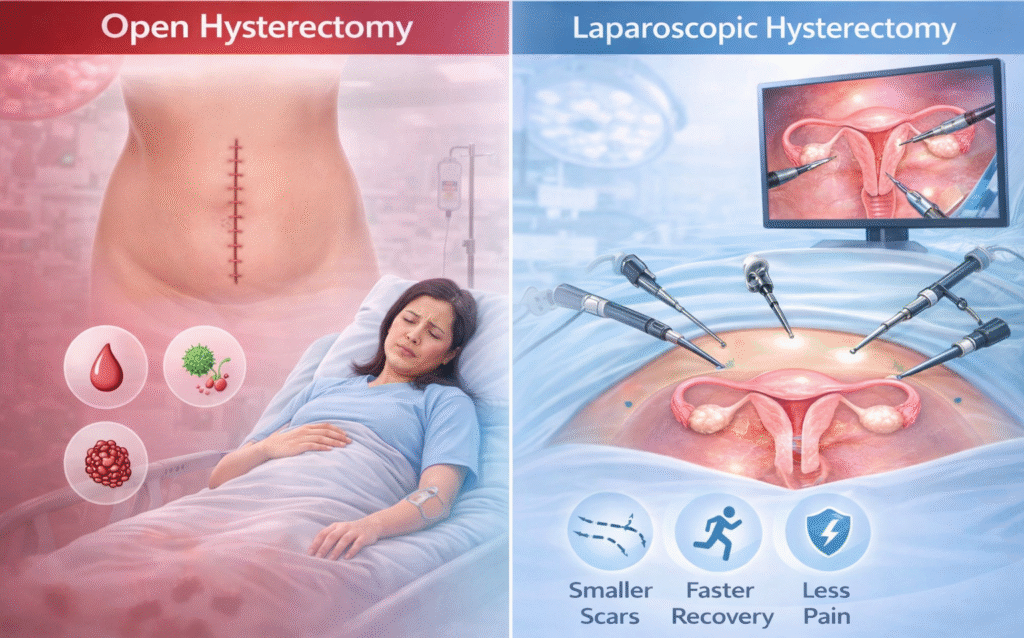
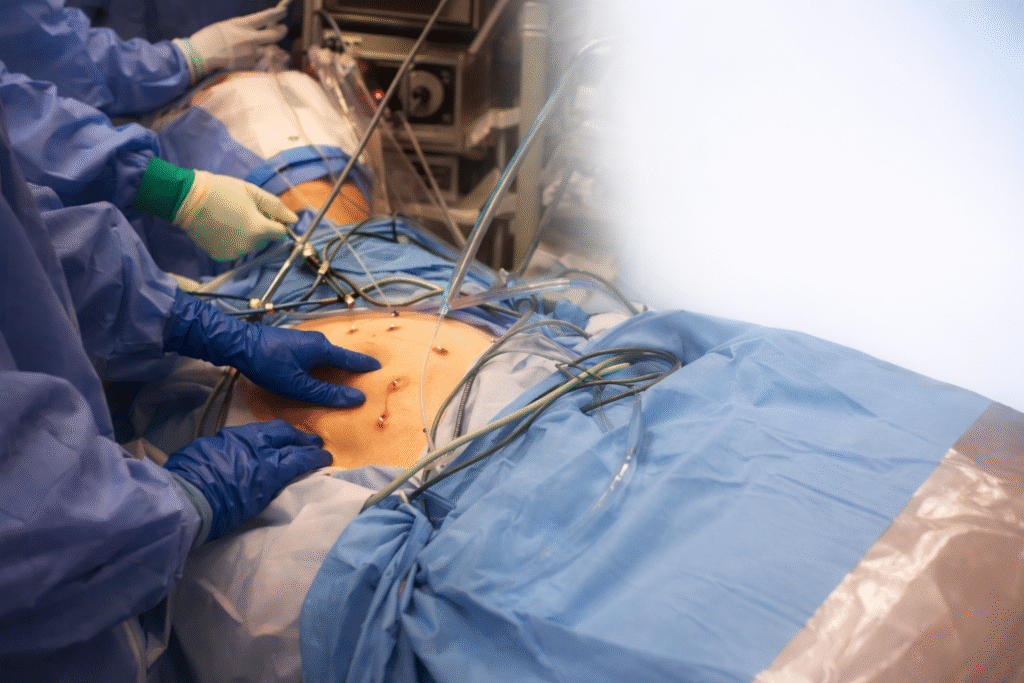
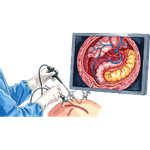
Laparoscopic hysterectomy uses tiny “keyhole” cuts instead of a large incision, helping you recover faster with less pain and minimal scarring.
Advantages:
Smaller scars with improved cosmetic results
Less pain and faster return to routine
Shorter hospital stay and reduced blood loss
Dr Shah has extensive experience in advanced laparoscopic gynaecological surgery and has successfully handled thousands of complex cases.
Recovery: What to Expect
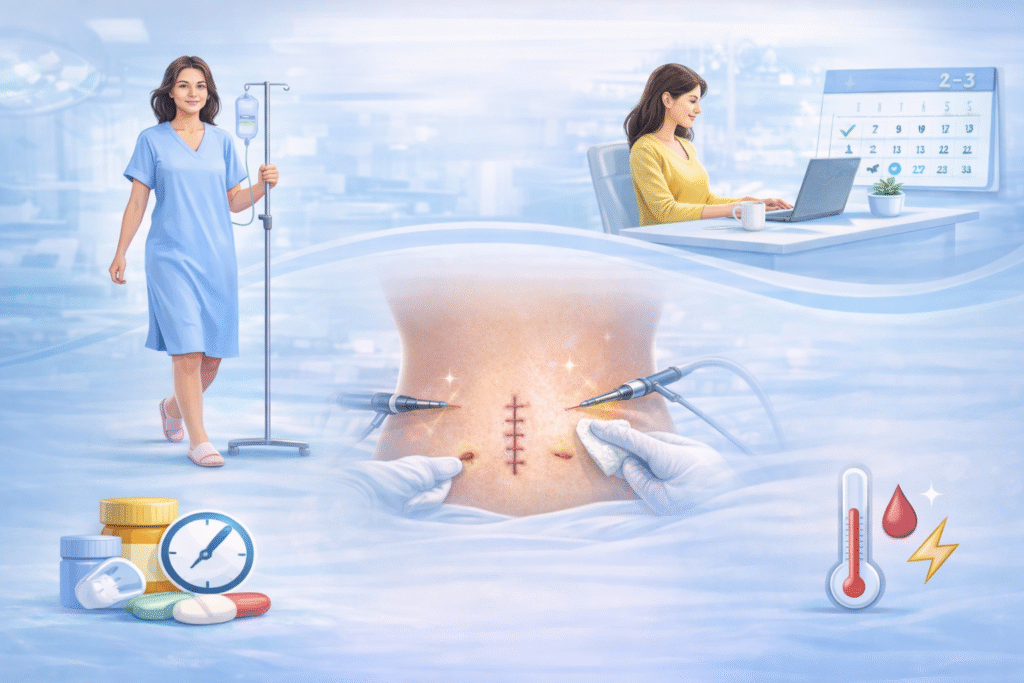
Most women walk the same or the next day after a laparoscopic hysterectomy and return to light work in 2-3 weeks.
Recovery tips:
Take prescribed medicines on time
Avoid heavy lifting and strenuous activities initially
Keep the incision area clean and dry
Report fever, heavy bleeding, or severe pain immediately
With proper guidance and follow-up, you can gradually return to your normal routine, travel, and intimacy with more confidence and comfort.
Recovery: What to Expect

Senior gynecologist and laparoscopic surgeon with 25+ years of experience
Strong expertise in laparoscopic, vaginal and abdominal hysterectomy

Thousands of successful surgeries, including complex fibroid and prolapse cases

Compassionate, patient-centric counselling and personalised treatment plans
You are guided at every step, from diagnosis to recovery, so you feel supported, informed, and in control of your health.
Book Your Appointment with Dr. Amita Shah!
If heavy bleeding, pain, or prolapse is affecting your daily life, don’t wait for it to get worse.
Frequently Asked Questions
No. Medicines, hormonal IUDs, myomectomy, and other procedures are often tried first. Hysterectomy is considered when these fail, are not suitable, or when there is cancer or a high risk of cancer.
If your ovaries are removed, you will have surgical menopause with possible hot flashes and mood changes. If ovaries are left in place, your hormones and menopause timing are usually similar to your natural pattern.
With a laparoscopic or vaginal hysterectomy, most women go home in 1–2 days. Abdominal hysterectomy may require a slightly longer stay, depending on recovery.
Light desk work often resumes in 2-3 weeks after a laparoscopic hysterectomy, while heavy physical work may need 4-6 weeks. Your doctor will guide you based on your healing and job type.
Once healing is complete, many women actually find sex more comfortable as pain and heavy bleeding are gone. If ovaries are removed, hormone changes may temporarily affect desire or lubrication, which can be managed with medical support