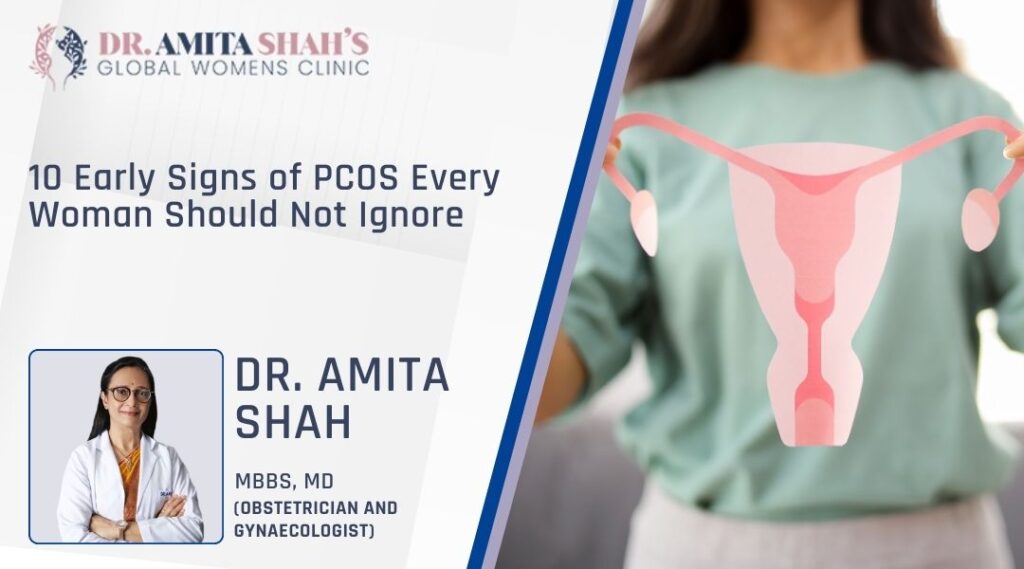
Understanding PCOS Symptoms and Why Early Detection Matters in PCOS
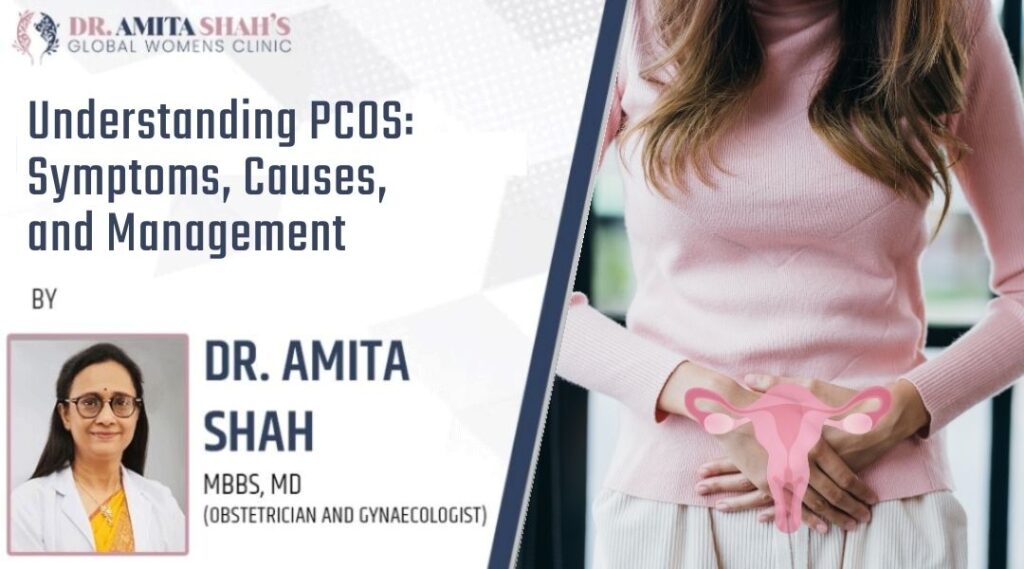
PCOS or Polycystic Ovary Syndrome, is a common hormonal problem that affects women of reproductive age. A lot of symptoms of PCOS go unnoticed by women, thinking they are undergoing hormonal issues due to stress or lifestyle changes. Ignoring these symptoms can cause problems like infertility, diabetes and heart problems.
Irregular Periods and Ovulation Problems
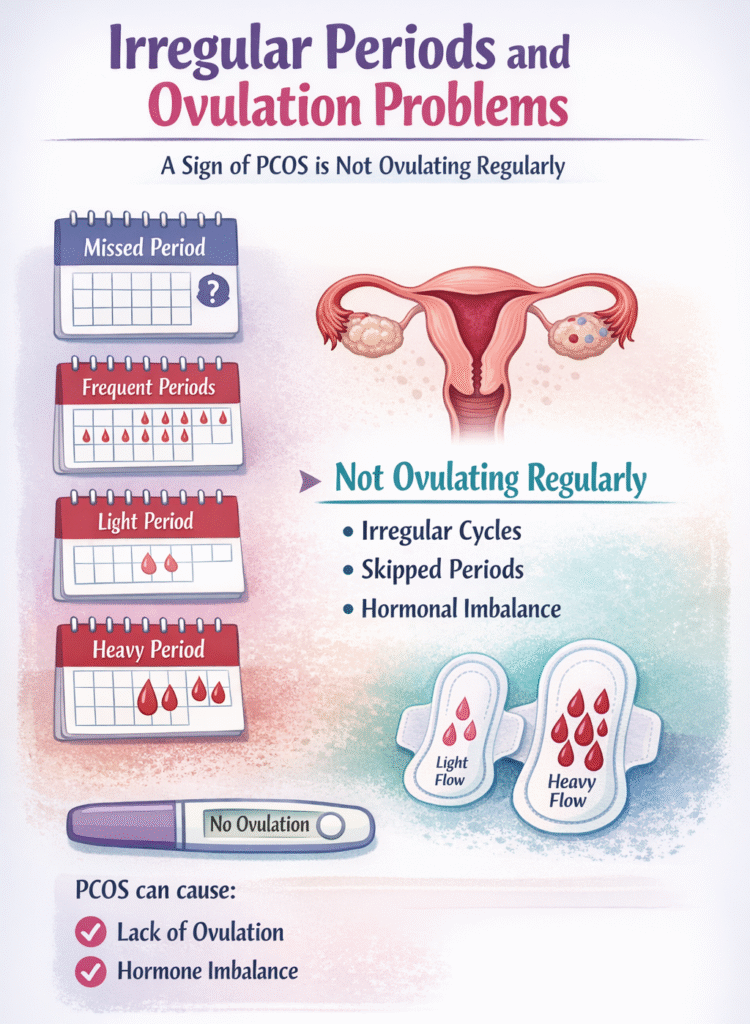
One of the signs of PCOS is when your periods are not regular. You might not get your period for a time, or you might get it too often. Sometimes your periods might be very heavy or very light. This happens because you are not ovulating regularly, which is a sign of PCOS.
Excessive Hair Growth and Persistent Acne
Excessive hair growth on your face, chin, chest, stomach or back is also a sign of PCOS. This happens because your body has many male hormones. Some women also get acne that does not go away with medicine. This kind of acne often shows up on your jaw and chin. Can last until you are an adult.
Sudden Weight Gain and Insulin Resistance
If you start gaining weight suddenly, it can be a sign of PCOS. A lot of women with PCOS have difficulty losing weight, even with a healthy diet and exercise. This is usually because their bodies do not process insulin well. This spikes the blood sugar levels in the body, resulting in fat accumulating, especially around the stomach.
Hair Thinning and Scalp Hair Loss
Some women with PCOS get much hair on their bodies, but they lose hair on their heads. This can be very bad. Looks like the kind of baldness that men get. This happens because your hormones are out of balance.
Dark Skin Metabolic Changes
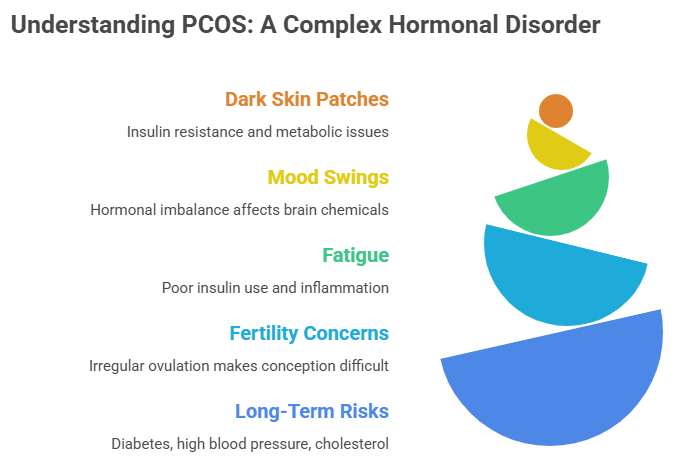
You might also get patches on your skin, especially around your neck, under your arms or in your groin area. These patches can mean that you have insulin resistance and that your body is having some metabolic problems. Some women think these patches are because of their skin, but they can be a sign of a hormonal problem.
Mood Swings, Anxiety and Emotional Changes
PCOS can also affect how you feel. Women with PCOS often get very moody, anxious, and irritable. Some even get depressed. When your hormones are out of balance, they can affect the chemicals in your brain that control your mood.
Fatigue and Low Energy Levels
Feeling tired all the time is another sign of PCOS. Even if you sleep all night, you might still feel tired. Not having a lot of energy. This can happen because your body does not use insulin well, because you have inflammation, or because you do not sleep well.
Difficulty Conceiving and Fertility Concerns
For some women, the first sign of PCOS is when they have trouble getting pregnant. Since they do not ovulate regularly, it can be hard to get pregnant. Sometimes women do not find out they have PCOS until they go to the doctor because they are having trouble getting pregnant.
Long-Term Health Risks of Ignoring PCOS
PCOS is not a problem with your reproductive system, it is a problem due to hormones that cause metabolic disorders that can affect your whole body. If you do not get proper treatment for PCOS, you are likely to get diabetes, high blood pressure, high cholesterol and problems with your uterus. If you find out you have PCOS early, you can get help. Make changes to your lifestyle, or you can take medicine, get hormone therapy or get help getting pregnant if you need it.
Listen to Your Body Early
If you notice these signs of PCOS and you go to the doctor, you can stay healthy. Avoid big problems. PCOS is something you can manage. If you get the right treatment, you can have a healthy and balanced life. You just need to pay attention to your body and not ignore the signs that something’s wrong. PCOS is a deal, and you should not ignore it. You should go to the doctor. Get help if you think you might have PCOS.